
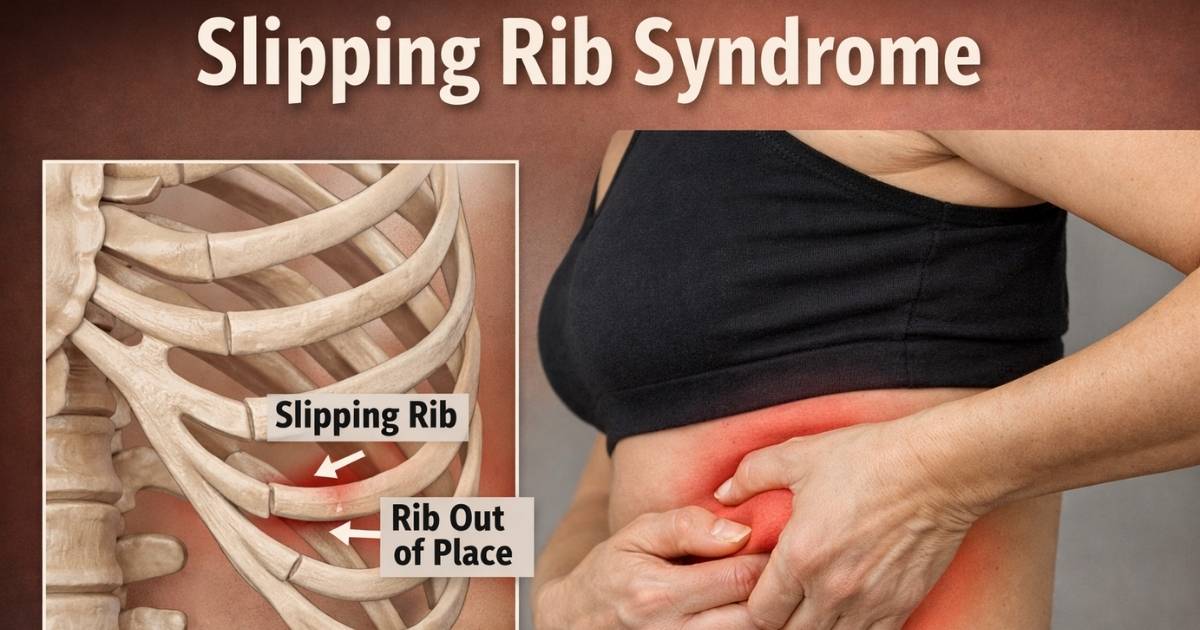
Have you ever felt a strange clicking or popping sensation near your lower ribs? Maybe it comes with a sharp jab of pain that radiates into your back or belly. You might have brushed it off as a pulled muscle or a random cramp. But if this keeps happening, you could be dealing with slipping rib syndrome, a condition that gets misdiagnosed far too often.
It’s more common than most people realize, and the frustrating part is that it can take months (sometimes years) before someone finally puts a name to it. Let’s break it down together so you actually know what’s going on.
What Is Slipping Rib Syndrome?
Slipping rib syndrome is a musculoskeletal condition where one or more of the lower ribs move out of their normal position, causing recurring pain and discomfort. The ribs involved are usually the 8th, 9th, or 10th ribs, which are sometimes called “false ribs.” Unlike the upper ribs, these don’t connect directly to the sternum. Instead, they attach to each other through fibrous tissue and cartilage.
When that connective tissue weakens or gets disrupted, the rib tip can slip beneath the one above it. That slipping motion irritates the surrounding intercostal nerves, which is exactly where the sharp, stabbing pain comes from. Think of it like a door hinge that’s slightly loose, it works most of the time, but every now and then it catches and causes a problem.
This condition goes by several names in medical literature. You might see it called clicking rib syndrome, rib-tip syndrome, or interchondral subluxation. No matter what it’s labeled, the core issue is the same: rib cartilage instability that leads to chronic chest wall pain.
Read More: Costal Cartilage Explained: Causes, Functions, Symptoms & Care Tips
What Are the Symptoms of Slipping Rib Syndrome?
The symptoms can vary quite a bit from person to person, which is part of why this condition gets misunderstood so frequently. Some people feel a dull, nagging ache most of the time. Others experience sudden, sharp flare-ups during specific movements. And many describe a clicking rib sensation, almost like something popping in and out near the lower chest.
Common symptoms include pain that worsens with twisting, bending, or deep breathing. You might also notice that sitting in certain positions or even just coughing makes things worse. Because the lower ribs sit close to the upper abdomen, the pain can mimic digestive issues, which is why so many patients end up at a gastroenterologist before anyone checks the ribs. Respiratory pain from rib movement is another hallmark sign that something mechanical is going on.
Fatigue is also surprisingly common. Constantly guarding against pain takes a toll on your body. You tense your core, avoid certain movements, and gradually your posture starts to shift. That compensation pattern creates its own set of secondary aches.
What is the location of the Slipping Rib Syndrome Pain?
The pain from slipping rib syndrome typically shows up along the lower rib margin, anywhere from the side of your torso around to your back. Many people describe it as starting near the front of the lower chest and then radiating toward the back or upper abdomen. That radiating quality is what makes it so easy to confuse with kidney issues, gallbladder problems, or even a stomach ulcer.
Some patients feel it mainly when they’re active, during sports, lifting, or even laughing. Others feel it at rest, especially when lying in certain positions. The location tends to shift slightly depending on which rib is involved, but rib-tip discomfort and lower rib pain are the most consistent complaints across the board.
Which Ribs Are Affected by Slipped Rib Syndrome?
The ribs most commonly involved are the false ribs, specifically ribs 8, 9, and 10. Occasionally, rib 11 is involved as well. These ribs are structurally different from the true ribs above them because they rely on cartilage and fibrous connections rather than a direct link to the sternum.
That flexibility is actually useful for breathing and movement. But it also means these ribs are more susceptible to false ribs hypermobility, a situation where the cartilage becomes too loose and allows abnormal motion. When the rib tip slips under the rib above it, that’s called costal subluxation, and it’s exactly what triggers the nerve irritation and pain cycle.
The 8th rib tends to be the most frequently affected, but bilateral cases (where both sides are involved) do occur. It’s less common, but not rare, especially in athletes or people who’ve had repeated rib trauma.
What Causes Slipping Rib Syndrome?
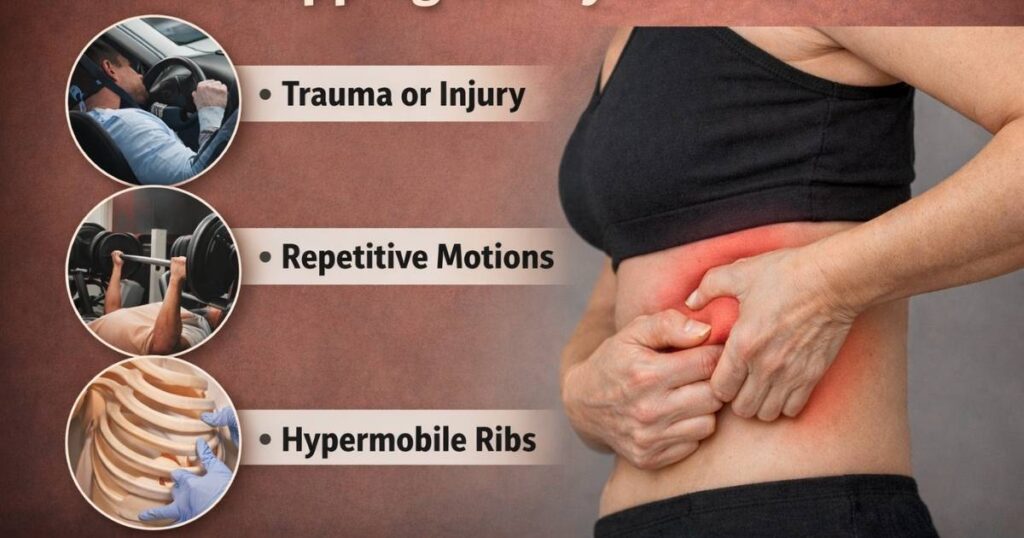
There isn’t always one clear-cut cause, which makes this condition tricky. In many cases, it develops after some form of trauma to the chest wall, a sports collision, a car accident, or even a hard fall. Trauma-induced rib injury can weaken the cartilage and fibrous tissue that holds the lower ribs in place, setting the stage for instability.
Overuse rib injury is another common culprit, particularly in athletes who perform repetitive trunk movements. Rowers, swimmers, gymnasts, and golfers all show up in the research with higher-than-average rates of this condition. Repeated stress on the same area gradually wears down the cartilage tissue over time.
Postural rib misalignment plays a role too. People who sit hunched for long hours (think desk workers or students) place uneven loads on the rib cage. Over time, that asymmetry can contribute to rib cage instability. Rib cartilage weakening can also happen without obvious trauma, sometimes it’s just a gradual degenerative process, especially as we age.
There’s also a connective tissue angle worth considering. People with conditions like hypermobility syndrome or Ehlers-Danlos syndrome tend to have looser joints and cartilage throughout the body, and the lower ribs are no exception.
Who Is at Risk for Slipping Rib Syndrome?
Honestly, anyone can develop this condition. But some groups are more vulnerable than others. Athletes are at the top of that list, particularly those in contact sports or activities that involve a lot of trunk rotation. A rugby player taking hits to the side, a tennis player with a big serve, a competitive rower pulling thousands of strokes, all of these scenarios create repetitive mechanical stress on the lower ribs.
Children and teenagers aren’t immune either. Pediatric rib injury from sports or rough play can lead to pediatric SRS evaluation if symptoms persist. Kids are still developing their cartilage and connective tissue, which can sometimes make them more susceptible to these kinds of injuries.
Adults with physically demanding jobs also show up frequently in clinical literature. Repeated lifting, twisting, or carrying heavy loads puts continuous strain on the chest wall. And as mentioned, people with pre-existing connective tissue disorders or a history of chest trauma carry higher baseline risk.
Women appear to be diagnosed with this condition slightly more often than men, though it’s not entirely clear whether this reflects a true biological difference or simply a pattern of who seeks care.
How Is Slipping Rib Syndrome Diagnosed?
This is where things get complicated. There’s no specific blood test or imaging scan that definitively confirms slipping rib syndrome. In fact, standard X-rays and even MRIs often come back completely normal, which leads a lot of patients to feel dismissed or confused.
The most reliable diagnostic tool is actually a physical exam technique called the hooking maneuver. During this test, a clinician hooks their fingers under the lower rib margin and gently pulls forward. If that reproduces the patient’s typical pain or that familiar clicking sensation, that’s a strong indicator of the condition. It’s not fancy, but it works.
Imaging for rib pain, including ultrasound and dynamic CT scans, can sometimes show the rib movement in real time, which is helpful for confirming the diagnosis or ruling out other structural issues. Rib movement diagnosis through dynamic imaging is increasingly being used in complex cases where the clinical picture isn’t clear.
Because the symptoms overlap so heavily with gastrointestinal and cardiac conditions, many patients go through a long process of ruling things out before landing on a musculoskeletal explanation. Thoracic pain syndrome, costochondritis, and intercostal nerve irritation are all in the differential diagnosis, which is why a thorough evaluation by someone familiar with chest wall pathology is so important.
Treatment Options for Slipping Rib Syndrome
Most people with slipping rib syndrome don’t need surgery. That’s genuinely good news. The majority of cases respond well to conservative management, especially when caught and addressed reasonably early.
Conservative treatment for SRS usually starts with activity modification, simply avoiding the specific movements that trigger pain while the area settles down. Anti-inflammatory medications can help manage acute flare-ups. Physical therapy is a cornerstone of recovery, targeting the muscles and posture patterns that place extra load on the unstable rib. Rib bracing support is sometimes used in the short term to limit painful movements and allow the area to heal.
For more persistent or severe pain, an intercostal nerve block can provide meaningful relief. This involves injecting a local anesthetic near the affected intercostal nerve to interrupt the pain signal. It’s not a permanent fix, but it can break the pain cycle and allow patients to engage more fully in rehabilitation.
How do you fix a slipping rib syndrome?
Fixing slipping rib syndrome depends on how severe the instability is. Mild to moderate cases typically improve with a structured rehabilitation program that addresses posture correction for rib stability, core strengthening, and breathing mechanics. Diaphragmatic breathing exercises are particularly helpful because they retrain the way the chest wall moves during respiration, reducing mechanical stress on the unstable rib.
In cases where conservative care hasn’t worked after several months, surgery may be considered. The most common procedure is a rib resection, where the unstable rib tip and the associated cartilage are removed. Recovery takes several weeks, but outcomes tend to be favorable for well-selected patients. The goal is to eliminate the source of the mechanical irritation rather than just managing the pain.
What exercises help slipping rib syndrome?
Exercise plays a huge role in long-term management, but you need to choose the right ones. Aggressive or high-impact movements can make things worse, especially in the early stages. Instead, focus on gentle, controlled work that builds stability without provoking pain.
Diaphragmatic breathing is usually the starting point. Learning to breathe from the belly rather than the upper chest reduces the repetitive stress on the lower rib area. From there, core strengthening for ribs becomes the focus, but this means deep core work like gentle dead bugs, bird dogs, and controlled plank progressions rather than heavy crunches or loaded rotational exercises.
Posture work is equally important. Stretching the thoracic spine, strengthening the mid-back, and learning how to sit and stand without slumping all help reduce the mechanical load on the affected ribs. Physical therapy for ribs, guided by a therapist familiar with chest wall conditions, is by far the most effective approach. Don’t try to wing this on your own based on a generic workout plan.
Can You Prevent Slipping Rib Syndrome?
Full prevention isn’t always possible, especially if you’re in a high-contact sport or have a connective tissue disorder. But there’s a lot you can do to lower your risk. Maintaining good posture is probably the most underrated factor. When you habitually sit or stand in alignment, your rib cage carries load evenly. That reduces the chance of one area being repeatedly overstressed.
Strengthening your core is the other big one. A well-functioning deep core acts like a natural corset for your torso, keeping your ribs and spine stable during movement. Athletes in particular should include thoracic mobility and core stability work in their training programs year-round, not just when something hurts.
If you’ve had a chest wall injury in the past, getting proper rib trauma recovery support from a physiotherapist can prevent the kind of compensatory patterns that eventually lead to chronic instability. Don’t rush back to full activity after a rib injury. Give it the time it genuinely needs.
When Should You Seek Medical Attention?
Any chest pain deserves attention, especially if it’s new or severe. That said, not all rib pain is urgent. You should seek prompt medical evaluation if your pain is accompanied by shortness of breath, heart palpitations, or pain that radiates to your arm or jaw, those symptoms need to be ruled out for cardiac causes first.
For slipping rib syndrome specifically, it’s worth seeing a doctor if your lower rib pain keeps coming back, if it’s affecting your daily activities, or if conservative measures like rest and over-the-counter pain relief aren’t helping. Early diagnosis means earlier treatment, and earlier treatment means a faster return to the activities you enjoy.
Don’t sit on this for years. A lot of people do, thinking it’s something minor that will sort itself out. Sometimes it does. But when it doesn’t, the longer you wait the more compensation patterns develop, and those take longer to unwind.
FAQ’s
What is slipping rib syndrome and is it serious?
It’s a condition where the lower ribs move out of place, causing pain and clicking sensations. It’s rarely life-threatening but can significantly affect quality of life if left untreated.
Can slipping rib syndrome heal on its own?
Mild cases sometimes improve with rest and activity changes, but persistent cases usually need physical therapy or medical intervention to resolve properly.
Is slipping rib syndrome common in children?
Yes, pediatric cases do occur, often linked to sports injuries. Children should be evaluated by a physician if lower rib pain keeps recurring after activity.
How long does recovery from slipping rib syndrome take?
It varies. Conservative treatment can take a few weeks to several months. Surgical recovery typically requires four to six weeks before returning to normal activity.
Can slipping rib syndrome cause abdominal pain?
Absolutely. The pain often mimics upper abdominal discomfort because of the proximity to digestive organs, which is why it frequently gets misdiagnosed as a gastrointestinal issue.

Liam Grant is a health writer passionate about evidence-based wellness. With a background in nutrition and digital health research, he shares practical, medically reviewed insights promoting balanced living. Evan’s work focuses on trustworthy, expert-backed health advice designed to improve daily habits, mental clarity, and overall well-being for readers worldwide.