

You’re in the middle of a workout, pushing through a heavy bench press, and suddenly, ouch. There’s a sharp, burning sensation across your chest. Or maybe you woke up this morning after a rough night of coughing and now every breath feels like a punishment. Sound familiar?
A pulled chest muscle is more common than most people realize. It can happen to athletes, weekend warriors, office workers with bad posture, or literally anyone who sneezed too hard. The tricky part? Chest pain of any kind tends to send people into a panic, and honestly, that’s understandable. Your brain immediately jumps to the worst-case scenario.
But here’s the thing, not every chest pain is a cardiac emergency. Sometimes it’s just an angry, overstretched muscle letting you know it’s had enough. The key is knowing what you’re dealing with.
What Is a Pulled Chest Muscle?
A pulled chest muscle is essentially a strain. It happens when the muscle fibers in your chest get overstretched or partially torn. Think of your muscle like a rubber band. Stretch it just a little too far, and it starts to fray. Stretch it even further, and it snaps.
When people talk about a pulled chest muscle, they’re usually referring to a strain affecting the pectoralis major or minor, the intercostal muscles between the ribs, or other muscles that make up the chest wall. The injury can be mild, where only a few fibers are affected, or more severe, involving a significant muscle fiber tear in the chest.
What makes this injury frustrating is that the chest is constantly in motion. Every breath you take, every time you reach for something, every twist and turn, your chest muscles are involved. There’s no real way to “rest” them the way you might rest an ankle. That’s why chest muscle recovery time can feel longer than expected, even for minor strains.
The good news is that most cases heal well with proper care. You don’t need surgery. You don’t need to live in fear. You just need to understand what’s happening inside your body and how to respond.
Read More: Slipping Rib Syndrome: Symptoms, Causes, and Treatment
Chest Muscle Anatomy: Understanding the Key Muscles
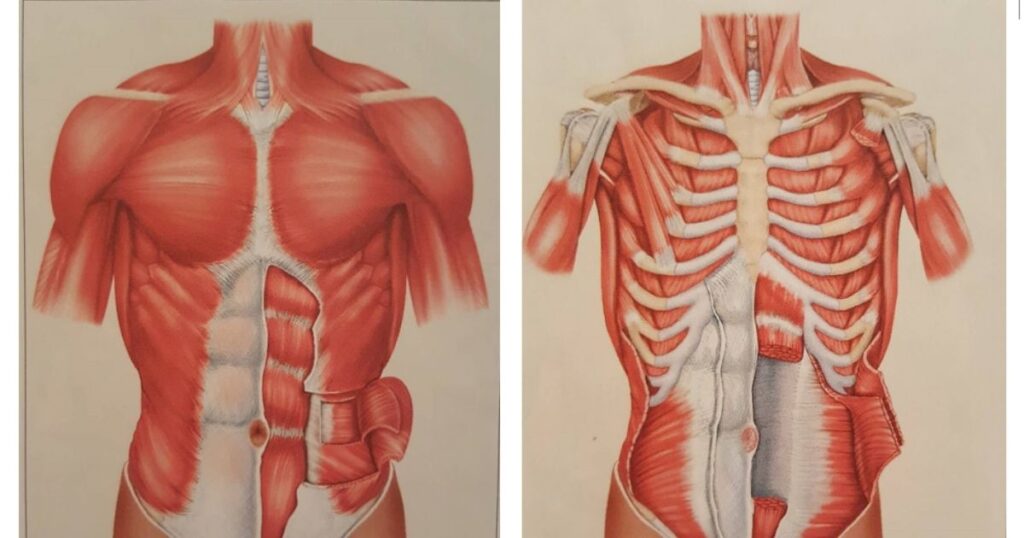
You don’t need a medical degree to understand this, but a little anatomy goes a long way when you’re trying to figure out where your pain is coming from.
The pectoralis major is the big, fan-shaped muscle that covers most of the front of your chest. It’s the one most people think of when they picture “chest muscles.” It connects your upper arm bone to your sternum and collarbone. This muscle does a lot of the heavy lifting, literally, when you push, press, or pull objects. A pectoralis major tear is one of the more serious injuries in this region, especially among weightlifters.
Sitting beneath it is the pectoralis minor, a smaller triangular muscle. It doesn’t get as much attention, but pectoralis minor strain can cause deep chest aching and even affect your shoulder movement and posture.
Then there are the intercostal muscles. These run between your ribs in thin bands. They help you breathe, twist, and bend. An intercostal muscle injury is incredibly common and is often the culprit behind chest pain that gets worse when you take a deep breath.
Other contributors to chest wall pain include the serratus anterior along the side of your chest, the subclavius near your collarbone, and even the muscles connecting to your shoulder blade. A shoulder and chest muscle injury often involves more than one of these structures at the same time.
Understanding which muscle is involved helps explain why your pain feels the way it does and why certain movements make it worse.
Common Causes of Pulled Chest Muscles
Chest muscle strain doesn’t just happen to professional athletes. It can sneak up on anyone, and the causes are more varied than you might expect.
Weightlifting is one of the most frequent culprits. A lifting-related chest strain often happens during bench press, dumbbell flys, or any exercise that places heavy load on an outstretched arm. When the weight is too heavy, the movement too fast, or the warm-up too short, the pectoral muscles take the hit.
Sports that involve throwing, swinging, or sudden twisting, like tennis, baseball, or golf, are also common triggers. A sports chest muscle tear can happen in a single explosive moment or build up gradually through overuse. Overuse chest muscle injury is surprisingly common among people who train intensely without giving their bodies adequate recovery time.
But you don’t have to be an athlete to pull a chest muscle. Strain from coughing is a very real thing. A prolonged coughing fit, whether from a cold, bronchitis, or even allergies, can strain the intercostal muscles significantly. People are often shocked to learn that their chest pain after being sick was muscular, not respiratory.
Posture-related muscle strain is another underrated cause. Sitting hunched over a desk for hours, day after day, places constant low-level stress on your chest and shoulder muscles. Over time, this can lead to chronic chest wall pain that’s dull, persistent, and hard to pinpoint.
Even something as simple as reaching up to a high shelf, carrying a heavy bag on one side, or sleeping in an awkward position can trigger a strain. Your chest muscles don’t ask for much, but they do ask that you treat them with a little respect.
Symptoms of Pulled Chest Muscle
Recognizing the right symptoms early makes a huge difference in how you manage the injury. Here’s what you’ll typically notice.
The most obvious sign is sharp localized chest pain. It usually develops right at the site of the injury, and you can often point to exactly where it hurts. This is different from the more diffuse, pressure-like sensation people describe during cardiac events.
Pain increases with movement. When you reach your arm across your body, twist your torso, or press on the sore area, the pain sharpens. This is because you’re actively engaging the strained muscle fibers.
Pain worsens with deep breathing is another telltale sign, especially with intercostal muscle injuries. Trying to take a full, satisfying breath becomes uncomfortable or even sharp. This can feel alarming, but if the pain is localized and tied clearly to movement rather than accompanied by other warning signs, it’s often muscular.
You might also notice muscle tightness or a knot in chest area. The muscle may feel rigid or swollen to the touch. Bruising or swelling in chest can appear in more severe cases, particularly when there’s been a significant pectoral tendon injury or a complete muscle tear.
Difficulty moving your arm is worth paying attention to. If raising your arm above your head or extending it outward causes pain or feels limited, the pectoralis major or minor could be involved. Restricted shoulder mobility often goes hand in hand with a pulled pectoral muscle on the side that hurts.
Muscle spasms in chest are also possible. These involuntary contractions can be startling, especially if they happen at rest or at night. They’re your body’s way of guarding the injured area.
How Symptoms Differ by Muscle Location
Where your pain lives on your chest tells a story. Left-side chest strain and right-side chest strain have slightly different presentations, and knowing this helps you avoid unnecessary panic.
Right-side chest pain from a muscle strain is often linked to dominant-side overuse. If you’re right-handed and you play sports, lift weights, or do repetitive physical work, your right pectoral and intercostal muscles take on more strain. The pain tends to be sharp with reaching or pushing movements on that side.
Left-side chest muscle pain can feel more alarming because the heart lives on the left. However, muscular left-side pain has specific characteristics. It worsens with touch, movement, and deep breathing. It doesn’t typically radiate down the arm or cause sweating, nausea, or dizziness. If it does, that’s a completely different conversation, and you need emergency care immediately.
Upper chest muscle pain often points to the pectoralis minor or subclavius muscles. It can feel like pressure near your collarbone or upper ribs. This type also tends to affect posture and shoulder movement more noticeably.
Pain deep in the chest wall, between the ribs, suggests intercostal involvement. This tends to feel worse when you cough, laugh, sneeze, or take a deep breath, as all of these actions compress or stretch those small but hardworking muscles.
Tenderness under the chest, near the lower rib margins, can indicate involvement of the lower intercostals or even the serratus anterior. This area is often overlooked but is a common site of exercise-related chest injury, especially in activities that involve a lot of trunk rotation.
Pulled Chest Muscle vs Heart Attack: How to Tell the Difference
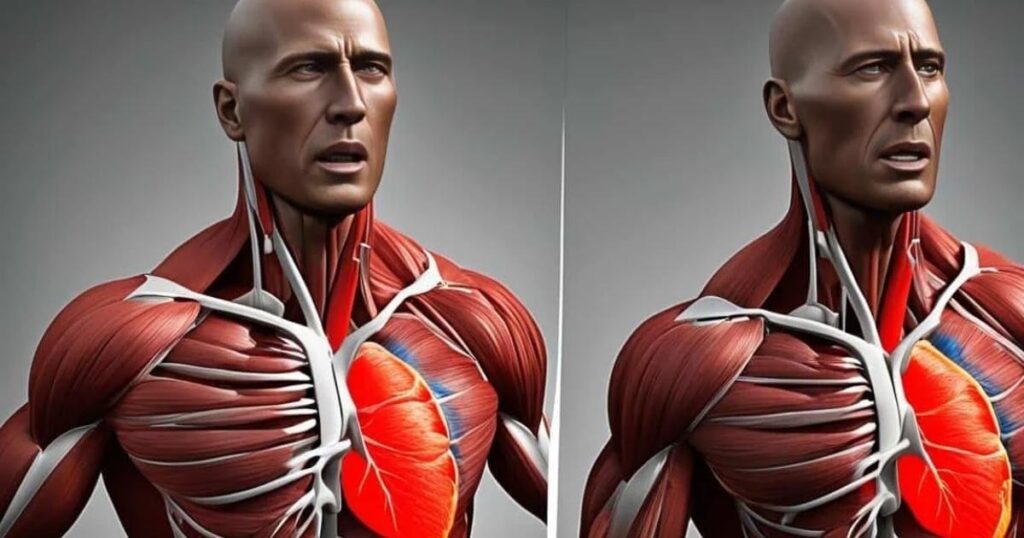
This is the section everyone needs to read carefully. Pulled chest muscle vs heart attack is one of the most important distinctions in medicine, and confusion between the two can cost precious time or cause unnecessary panic.
A pulled chest muscle typically causes pain that is sharp, localized, and directly tied to movement or touch. You can usually reproduce the pain by pressing on the area or moving your arm or torso in a specific direction. The pain tends to stay in one spot. It doesn’t travel.
A heart attack is different. The pain is often described as pressure, squeezing, tightness, or heaviness in the center or left side of the chest. It may radiate to the left arm, jaw, neck, or back. People often describe it as feeling like an elephant is sitting on their chest.
Here’s what separates the two more clearly. Shortness of breath chest pain, especially when combined with sweating, nausea, dizziness, or a sense of impending doom, strongly suggests a cardiac cause. These symptoms don’t accompany a simple muscle strain.
Chest pain after exercise that fades quickly with rest and leaves no tenderness to the touch is more likely cardiac in nature, not muscular. Muscular pain tends to linger and get worse when you poke around the sore area.
The timing also matters. A sudden chest pain after lifting that was clearly triggered by a specific movement is a strong indicator of a muscular strain. Cardiac chest pain often comes out of nowhere, sometimes even at rest or during sleep.
When in doubt, always err on the side of caution. If you’re unsure, don’t try to self-diagnose. Get evaluated. No article, including this one, should replace a proper pulled chest muscle diagnosis from a medical professional.
Pulled Chest Muscle in Women: Left vs Right Side Symptoms

Pulled chest muscle symptoms in women deserve their own conversation because they’re often misunderstood or misattributed.
Women sometimes feel chest muscle pain differently due to differences in muscle mass distribution, hormonal influences on ligament and muscle laxity, and the fact that breast tissue can make palpation more difficult. This can make it harder to pinpoint the exact source of the pain.
Left-side chest muscle pain in women is frequently confused with cardiac symptoms, especially in middle-aged women whose risk of atypical heart attack presentations is higher. A female chest muscle strain on the left will still have the hallmarks of a muscular injury: reproducible pain with touch or movement, no radiating symptoms, and a clear mechanical trigger.
Right-side chest strain in women often shows up after upper body workouts, yoga, or sports involving overhead motion. The pain is usually localized and deepens with specific movements like reaching across the body or pushing something away.
Women who are breastfeeding or carrying infants frequently develop posture-related muscle strain from hunching, holding awkward positions, and the repeated physical demands of childcare. This is a surprisingly common cause of chronic chest wall pain that often goes unaddressed.
Hormonal changes during the menstrual cycle can temporarily increase muscle sensitivity, meaning a minor strain that might barely register in another context can feel more intense. This doesn’t mean the injury is worse, it just means the pain perception is heightened.
If you’re a woman experiencing unexplained chest pain, always get it checked out first. Once cardiac and other serious causes are ruled out, then investigating muscular sources makes sense.
Chest Muscle Strain Severity Levels
Not every pulled chest muscle is created equal. Strains are typically classified into three grades, and understanding where you fall on that spectrum shapes how you should approach treatment and recovery.
A Grade 1 strain is mild. Only a small number of muscle fibers are affected. You’ll feel discomfort and maybe some tightness, but your strength and range of motion are mostly intact. Most people with a Grade 1 strain can recover with rest, ice therapy for chest strain, and over-the-counter pain relief within a week or two.
A Grade 2 strain is moderate. More fibers are torn, and the pain is noticeably more intense. You’ll likely have reduced strength in the affected arm, visible tenderness, and possibly some bruising or swelling. Chest muscle recovery time for a Grade 2 strain typically runs between three to six weeks. You’ll need to be more careful about activity and possibly see a physiotherapist.
A Grade 3 strain is a complete or near-complete rupture. This is rare but serious. A severe chest muscle tear at this level causes significant pain, obvious swelling, and a notable loss of function. In some cases, especially with pectoral tendon injuries in athletes, surgery may be required. Recovery can take several months and usually involves supervised rehabilitation.
Muscle inflammation in chest is present across all grades but is most significant in Grade 2 and 3 injuries. Swelling is your body’s natural response to damage, but managing it early with ice and rest helps prevent the inflammation from getting out of control.
When to Seek Emergency Care
Here’s where things get serious. Some chest pain warrants a calm trip to your doctor. Other chest pain demands a 911 call right now.
Emergency signs for chest pain that should never be ignored include pressure or squeezing in the center of your chest, especially if it lasts more than a few minutes or comes and goes. Radiating pain down your left arm, into your jaw, neck, or back is a red flag. Shortness of breath that accompanies chest pain at rest, without any clear physical trigger, is another.
Sweating without exertion, sudden nausea or vomiting, lightheadedness, or a feeling that something is genuinely wrong are all signs to call emergency services immediately. When it comes to knowing when to see the ER for chest pain, the rule is simple: when in doubt, go.
Even if the pain turns out to be muscular, no emergency physician will be annoyed that you came in to get it checked. Getting a chest pain evaluation is never a waste of time when the alternative is ignoring something that could be life-threatening.
On the muscular side, you should still see a doctor soon if your pain is severe and doesn’t improve with rest, if you notice a visible dent or deformity in your chest wall, if you have significantly restricted shoulder mobility that isn’t getting better, or if the pain is interfering with your ability to breathe comfortably.
Chronic chest muscle discomfort that persists for weeks without improvement also deserves medical attention. It could indicate a more significant injury than initially thought.
Treatment Options for Pulled Chest Muscle
The approach to treating a pulled chest muscle depends on how severe the injury is, but most people can manage it effectively at home with a bit of discipline.
The RICE method for chest injury is the standard starting point. Rest, ice, compression, and elevation. In practice for a chest strain, this means avoiding activities that aggravate the pain, applying ice therapy for chest strain for 15 to 20 minutes every few hours in the first 48 to 72 hours, and using a supportive wrap or binder if your doctor recommends one. Elevation isn’t as straightforward for the chest as it is for a limb, but keeping activity light and staying upright rather than lying flat can help.
Home remedies for chest strain also include using over-the-counter anti-inflammatory medications like ibuprofen or naproxen. These help reduce muscle inflammation in chest and provide meaningful pain relief for chest injury. Always follow the dosage instructions and check with your doctor if you have any conditions that might be affected.
After the initial acute phase, gentle movement and stretching become important. Staying completely immobile for too long can lead to stiffness and a longer recovery. A physiotherapist can guide you through appropriate exercises that promote healing without reinjuring the area.
Heat therapy can be introduced after the first few days, once the acute swelling has settled. Warm compresses or a heating pad on a low setting help increase blood flow and ease muscle tightness or knots in chest.
For severe chest muscle tears, especially Grade 3 injuries or pectoral tendon injuries in athletes, surgical repair may be needed. This is followed by a structured rehabilitation program. The pulled pectoral muscle recovery timeline in these cases can range from several months up to a year for full return to sport.
Pain relief for chest injury from prescription-strength anti-inflammatories or muscle relaxants may also be recommended by your doctor in more serious cases.
Preventing Pulled Chest Muscles
Prevention isn’t glamorous, but it’s a lot more fun than dealing with a torn pectoral muscle for six weeks.
Warming up properly before exercise is genuinely non-negotiable. A five-minute dynamic warm-up that activates your chest, shoulders, and upper back makes your muscles more pliable and ready to handle load. Cold muscles are stiff muscles, and stiff muscles tear more easily.
Gradual progression is another key principle. Whether you’re lifting, throwing, or doing any upper body activity, don’t jump straight to heavy loads or high intensity. Overuse chest muscle injury almost always comes from doing too much too soon. Respect the process.
Strengthening the muscles around the pectorals matters too. Your rotator cuff, rhomboids, and serratus anterior all work as a team with your pecs. When supporting muscles are weak, the pectorals compensate and take on more stress than they should.
Fixing your posture is one of the most underrated forms of prevention. Posture-related muscle strain is a slow burn, but it adds up. If you sit at a desk all day, take regular breaks, stretch your chest opener daily, and strengthen your upper back muscles.
After any overstretch of chest muscles or minor strain, give yourself adequate recovery time before returning to full activity. Rushing back is the single most common reason people re-injure themselves.
Finally, listen to your body. That nagging tightness in your chest after a heavy press day isn’t just stiffness. It’s a warning. Treat it as one.
FAQs
How long does a pulled chest muscle take to heal?
A mild Grade 1 strain typically heals within one to two weeks with rest and basic home care, while more moderate strains can take three to six weeks.
Can a pulled chest muscle cause shortness of breath?
Yes, especially with intercostal muscle injuries. Pain during deep breathing can make you take shallower breaths, which may feel like shortness of breath, but it’s usually muscular rather than a breathing problem.
How do I know if my chest pain is muscular or cardiac?
Muscular chest pain worsens with touch, movement, or specific positions. Cardiac pain tends to be pressure-like, doesn’t change with touch, and may come with sweating, nausea, or arm and jaw pain.
Can you pull a chest muscle from coughing?
Absolutely. Prolonged or forceful coughing puts significant strain on the intercostal muscles. Strain from coughing is one of the most common causes of chest wall pain that people don’t initially connect to a muscle injury.
Is heat or ice better for a pulled chest muscle?
Ice is best in the first 48 to 72 hours to reduce swelling and inflammation. After that, heat can help ease stiffness and promote blood flow to the healing tissue.

Liam Grant is a health writer passionate about evidence-based wellness. With a background in nutrition and digital health research, he shares practical, medically reviewed insights promoting balanced living. Evan’s work focuses on trustworthy, expert-backed health advice designed to improve daily habits, mental clarity, and overall well-being for readers worldwide.