
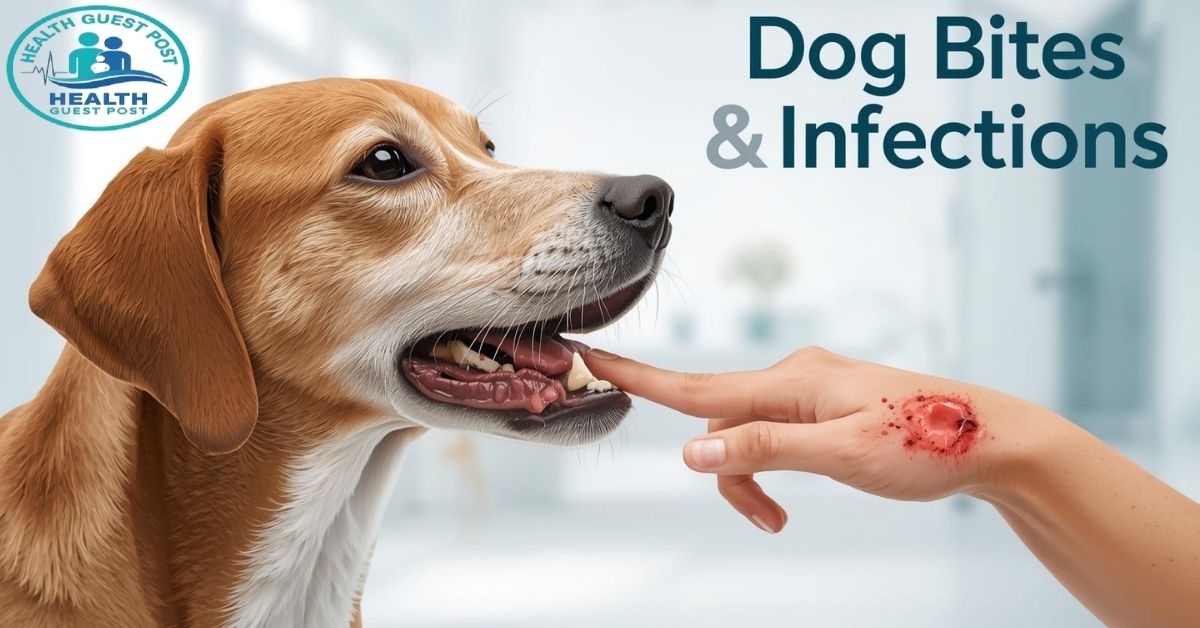
You’re playing with a dog, everything feels fine, and then, snap. A bite. Maybe it breaks the skin, maybe it doesn’t look that bad. But here’s the thing: dog bites are sneaky. What looks minor on the surface can turn into something serious pretty fast. Knowing when to rush to urgent care, when to stitch it up, and when to simply clean it at home could genuinely save you from a painful infection or worse.
Should I Get Stitches for a Dog Bite?
This is honestly the first question everyone asks after a dog bite, and the answer isn’t as straightforward as you’d hope. Not every bite needs stitches. But some absolutely do. The decision depends on the depth of the wound, its location on your body, how much time has passed since the bite, and your personal health history.
Deep lacerations that gape open, wounds on the face where cosmetic healing matters, and injuries near joints or tendons usually warrant professional closure. Shallow puncture wounds, on the other hand, often heal better when left open. Yes, you read that right. Open.
Here’s why that seems strange but makes total sense medically.
Read More: Understanding Bladder Distention: Causes, Symptoms & Emergency Care
Why Doctors Often Leave Dog Bites Open
A dog’s mouth carries a startling number of bacteria. We’re talking Pasteurella, Capnocytophaga, Staphylococcus, and Streptococcus, just to name a few. When you seal a contaminated wound with stitches, you’re essentially locking bacteria inside. That’s a recipe for a deep, fast-moving infection.
Doctors practice something called delayed primary closure, which means they clean the wound thoroughly, monitor it for 48 to 72 hours, and only stitch it shut once they’re confident there’s no brewing infection underneath. It’s not laziness. It’s strategy.
The “Golden Window” for Wound Closure
If closure is appropriate, timing matters enormously. The golden window for stitching most wounds is within six to eight hours of injury. After that, bacterial colonization increases significantly, and closing the wound becomes riskier.
Facial wounds get a bit more flexibility, sometimes up to 12 to 24 hours, because the face has exceptional blood supply that fights infection naturally. But for hand wounds, that window tightens considerably. Hands are notoriously difficult to treat, and most physicians are cautious about primary closure there at all.
High-Risk Areas
Not all dog bites are created equal. Where the bite lands on your body changes the entire treatment picture.
The Complexity of the Hand
A hand injury from a dog bite is treated with far more urgency than a bite on, say, your calf. Your hands contain tendons, nerves, blood vessels, and joint spaces packed into a remarkably small area. A puncture wound from a dog bite that reaches a tendon sheath can cause tenosynovitis, an infection that spreads along the tendon and can permanently damage hand function if not caught early.
If a dog bites your hand and the wound is anything more than a surface scratch, go to the emergency room. Don’t wait and see. Don’t bandage it at home and hope for the best. Hand infections move fast and get nasty.
Protecting the Face
Facial dog bite treatment is handled differently for two reasons: appearance and anatomy. The face heals remarkably well due to its rich vascular network, but bites near the eye, nose, or lips carry risks of structural damage and scarring that require a specialist’s eye.
Children are disproportionately affected by facial bites because they’re closer to a dog’s face when interacting. If a child receives a facial bite, especially near the eye or mouth, that’s an ER visit. Full stop.
Identifying Infection: Signs of Cellulitis and Beyond
Here’s where dog bites and infections become genuinely dangerous. An infected dog bite wound can escalate from mildly uncomfortable to medically serious within 24 to 48 hours. Dog bite cellulitis symptoms, for instance, can emerge surprisingly quickly, sometimes within just 12 hours of the bite.
Cellulitis is a bacterial skin infection that spreads through the soft tissue. It’s painful, it spreads, and left untreated, it can reach your lymph nodes or bloodstream. That’s when things cross into sepsis territory.
Watch for these warning signs of infection:
- Increasing redness that spreads outward from the wound
- Warmth or heat radiating around the bite area
- Swelling that worsens rather than improves after the first day
- Pus or cloudy discharge from the wound
- Red streaks extending away from the wound (this is a medical emergency)
- Fever, chills, or general flu-like symptoms
- Swollen lymph nodes near the bite
If you notice red streaking specifically, don’t call your doctor’s office for a next-day appointment. Go to the emergency room immediately. That streaking is a visual sign that infection is traveling through your lymphatic system, and it needs IV antibiotics fast.
Critical Vaccinations: Rabies and Tetanus Concerns
Two words that get thrown around after any animal bite: rabies and tetanus. Both deserve serious consideration, though for different reasons.
When Was Your Last Tetanus Shot?
A tetanus shot after a dog bite is recommended if you haven’t had one in the last five years, or if you genuinely can’t remember your last booster. Tetanus, caused by Clostridium tetani bacteria found in soil and animal mouths, can cause severe muscle spasms and is potentially fatal if untreated.
Puncture wounds are particularly high-risk for tetanus because they’re deep, narrow, and difficult to clean thoroughly. If a dog’s tooth punched deep into your skin, bring up your tetanus status when you see a doctor. Don’t assume you’re covered.
Assessing the Rabies Risk
The risk of rabies from dog bites in the United States is genuinely low, but it’s never zero. Domestic, vaccinated dogs carry minimal risk. Stray dogs, dogs with unknown vaccination history, or any wild animal carry a higher concern.
Rabies is 100% fatal once symptoms appear. But here’s the reassuring part: post-exposure prophylaxis, meaning the rabies vaccine given after potential exposure, is nearly 100% effective when started promptly. The catch is timing. It needs to begin quickly, ideally within 24 hours of exposure.
If you were bitten by a dog you don’t know, or a dog whose rabies vaccination status can’t be verified, report it to animal control and see a doctor that day. Don’t gamble on this one.
At-Home First Aid: What to Do in the First 10 Minutes
Whether you’re heading to the ER or deciding the bite is minor enough to manage at home, the first 10 minutes matter enormously. Here’s exactly what to do immediately after a dog bite.
Start by washing the wound aggressively. Use soap and warm running water and scrub for a full five minutes. This step alone dramatically reduces bacterial load and infection risk. Dog bite wound cleaning at this stage isn’t gentle rinsing. It’s vigorous, thorough washing.
After cleaning, apply gentle pressure with a clean cloth to stop any bleeding. Once bleeding is controlled, apply an antiseptic solution like povidone-iodine if you have it. Cover with a clean bandage loosely, not tight enough to trap moisture.
Do not close the wound with butterfly strips or tape if it’s a puncture wound. You’d be sealing bacteria inside. Let it breathe. Monitor it closely every few hours for the first 48 hours.
If the bite is on your hand, face, neck, foot, or near a joint, skip the home care entirely and go directly to urgent care or the ER.
Seek Professional Care for Dog Bites
Let’s cut through the noise here. You should seek professional care for dog bites in any of these situations: the wound is deep or gaping, you can’t stop the bleeding after 10 minutes of pressure, the bite is on your hand, face, or near a joint, the dog’s vaccination status is unknown, you notice any signs of infection within the first day or two, you have diabetes, a compromised immune system, or are on blood thinners, or the victim is a young child or elderly adult.
Urgent care handles most dog bites perfectly well during daytime hours. The emergency room is appropriate for severe wounds, suspected tendon or nerve involvement, facial bites in children, or any sign of rapid infection.
When you arrive, the doctor will likely irrigate the wound thoroughly, assess for deep tissue damage, discuss antibiotic prophylaxis, and review your vaccination history. Antibiotics to treat dog bite infections commonly include amoxicillin-clavulanate, which covers the broad bacterial spectrum found in dog saliva. If you’re allergic to penicillin, alternatives are available, so always mention that upfront.
FAQ’s
Do dog bites always need stitches?
No, not always. Deep or gaping wounds and facial bites often need closure, but puncture wounds are usually left open to prevent trapping bacteria and causing infection.
How long after a dog bite should I see a doctor?
Ideally within a few hours, especially if the wound is deep, on a high-risk area, or the dog’s vaccination history is unknown. Don’t wait more than 24 hours.
Can a dog bite get infected easily? Yes, very easily. A dog’s mouth contains dozens of bacterial species, and even small bites can introduce bacteria deep into tissue where it multiplies quickly.
Do I need a tetanus shot after a dog bite?
If your last tetanus booster was more than five years ago, or you’re unsure, yes. Puncture wounds especially carry tetanus risk due to their depth.
What are the first signs of infection after a dog bite?
Increasing redness, warmth, swelling that worsens after day one, and any pus or discharge are early signs. Red streaks or fever mean you need emergency care immediately.

Liam Grant is a health writer passionate about evidence-based wellness. With a background in nutrition and digital health research, he shares practical, medically reviewed insights promoting balanced living. Evan’s work focuses on trustworthy, expert-backed health advice designed to improve daily habits, mental clarity, and overall well-being for readers worldwide.