
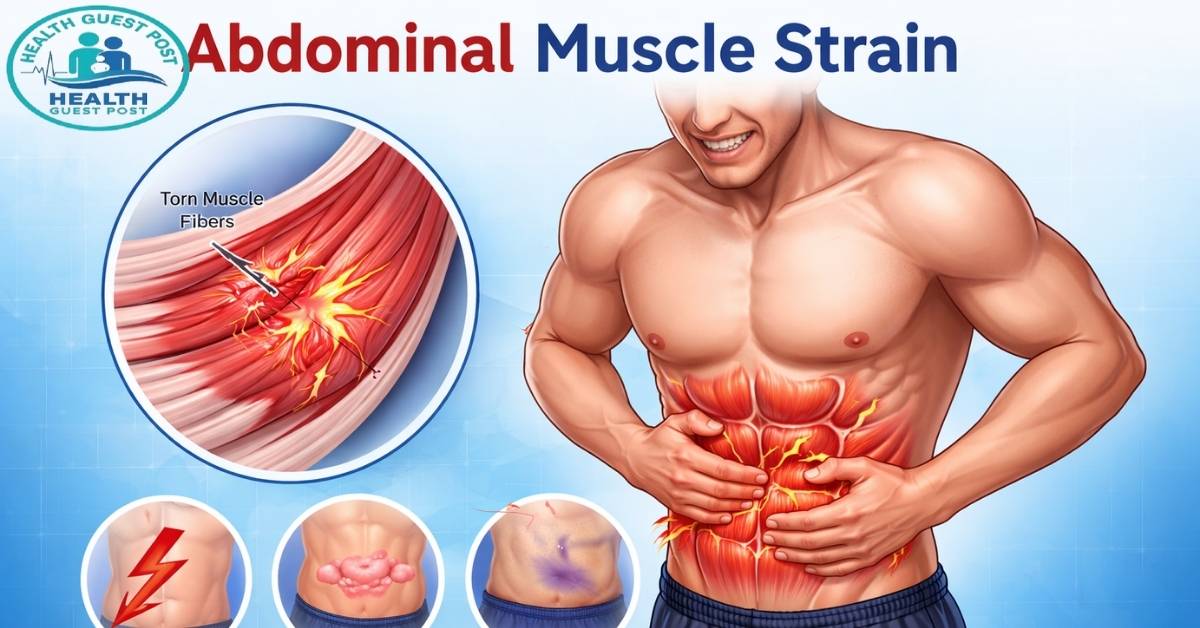
You’re going about your day, maybe lifting something heavy or finishing a tough workout, and suddenly there’s this sharp, nagging pain right in your midsection. It stops you cold. Is it serious? Did you pull something? Or is it something else entirely?
That kind of uncertainty is genuinely unsettling. Your stomach area does a lot of work every single day, and when something goes wrong there, it’s hard to know what you’re dealing with. The good news is that an abdominal muscle strain, while painful, is usually manageable. The key is knowing what you’re looking at.
This article breaks it all down in plain, honest terms. No medical jargon marathons. Just real, useful information about what a pulled stomach muscle feels like, why it happens, and what you can do about it.
What Is an Abdominal Muscle Strain (Pulled Stomach Muscle)?
Your abdominal wall is made up of several layers of muscle working together. They support your spine, help you move, breathe, and even digest food. When one or more of these muscles gets overstretched or partially torn, that’s what doctors call an abdominal muscle strain.
Think of it like a rubber band. Stretch it too far, too fast, and it doesn’t snap back cleanly. Your muscle fibers work the same way. A sudden twist, a heavy lift, or even a forceful sneeze can push them past their limit.
It’s commonly called a pulled stomach muscle, but technically it’s not the stomach organ that’s affected. It’s the surrounding musculature of the abdominal wall. The distinction matters because other conditions like hernias, appendicitis, or internal issues can also cause similar pain.
People sometimes wave off the discomfort, thinking it’ll just go away. Sometimes it does. But if the strain is moderate to severe, ignoring it can turn a short recovery into a much longer one.
Read More: Dog Bites & Infections: When to Seek Stitches
Where Do Abdominal Muscle Strains Occur?
The location of your pain tells you a lot. Different regions of the abdomen house different muscles, and strains can hit any of them. Here’s a breakdown of where things tend to go wrong.
Upper Abdominal Muscle Strain
Upper abdominal muscle pain often involves the rectus abdominis, the muscle that runs vertically down the center of your torso. Strains here tend to flare up during sit-ups, heavy lifting, or any movement that forces the upper body to contract hard against resistance.
You might feel a pulling sensation just below the ribcage, or a soreness that deepens when you laugh, cough, or lean forward. It can feel almost like a stitch in the side, only it doesn’t go away with rest the way a simple cramp does.
Lower Abdominal Strain
Lower abdominal strains are surprisingly common, especially in athletes and people who do a lot of running, kicking, or rotational movements. The lower fibers of the rectus abdominis and the surrounding connective tissue take the brunt of these activities.
Pain in the lower abdomen that spikes during leg raises, sprinting, or even standing up from a chair can point to a strain in this zone. It’s also worth noting that lower abdominal strain can be easily confused with groin pulls, hip flexor injuries, or even reproductive health issues in women.
Left Side Abdominal Muscle Strain
Left side abdominal pain from a muscle strain usually involves the oblique muscles on that side. These muscles wrap around your torso and are essential for rotation and lateral bending. Activities like golf swings, tennis serves, or even turning awkwardly while carrying something heavy can strain the left oblique.
You’ll typically notice the discomfort sharpens when you twist your torso to the right or bend sideways to the left. It may also feel tender to the touch along the left flank.
Right Side Abdominal Muscle Strain
Right side abdominal muscle strain follows the same oblique muscle pattern, just mirrored. However, right side pain deserves extra attention because it can mimic symptoms of appendicitis. If the pain is sudden, intense, and accompanied by fever or nausea, don’t assume it’s a muscle issue. Get checked out immediately.
For actual muscle strains on the right side, the pain will usually have a clear movement-related cause and will worsen with physical activity rather than rest.
Deep Abdominal Muscle Strain
This one’s often overlooked. The transverse abdominis, the deepest layer of your core, acts like a natural corset. It stabilizes the spine and pelvis. A transverse abdominis injury doesn’t always cause obvious surface-level pain. Instead, you might feel a deep, dull ache, core instability problems, or difficulty maintaining posture.
Deep core injuries are trickier to diagnose and often require professional evaluation. People with core stability problems from a transverse injury sometimes develop secondary issues like back pain if they go untreated.
Primary Abdominal Muscle Strain Symptoms
Knowing what a pulled stomach muscle actually feels like helps you respond to it properly. The symptoms vary slightly depending on severity, but there are several telltale signs to watch for.
The most immediate and recognizable symptom is sharp abdominal pain after lifting or sudden exertion. It often hits in the moment of strain and then lingers with a duller ache afterward. You might feel fine at rest but wince the second you move in a particular direction.
Stomach muscle pain when bending or twisting is another classic indicator. If rotating your torso, leaning to one side, or bending forward produces localized pain in the abdominal area, a muscle strain is a strong possibility.
Tenderness to the touch is also common. When you press on the affected area, it feels sore, sometimes quite noticeably so. This is a sign of abdominal wall inflammation at the injury site.
Muscle stiffness, especially when getting up in the morning or after sitting for a long time, can follow. Your body essentially splints the injured area to protect it, which causes surrounding muscles to tighten up.
In more significant strains, you may notice visible abdominal muscle swelling or slight bruising under the skin. This points to actual muscle fiber disruption rather than just overstretching.
Secondary Symptoms of Abdominal Strain
Beyond the immediate pain response, an abdominal strain can produce a cluster of secondary symptoms that are easy to attribute to something else entirely.
Abdominal muscle spasms are one of the most uncomfortable. The injured muscle involuntarily contracts, creating cramping sensations that can range from mildly annoying to genuinely alarming. These spasms are the body’s protective reflex, but they add another layer of discomfort to an already sore area.
You might also experience abdominal muscle weakness in the days following the injury. Tasks that normally feel effortless, like sitting up from bed, picking something off the floor, or holding a plank, suddenly demand a lot more effort. The injured muscle simply isn’t firing the way it should.
Difficulty breathing deeply is another secondary symptom worth noting. Your core muscles play a role in respiration, and a strained abdominal muscle can make full, deep breaths feel uncomfortable. This is especially true for strains in the upper abdomen.
Some people notice stomach muscle pain during movement even when they’re not consciously engaging their core. Walking, climbing stairs, or simply shifting positions can trigger the discomfort because virtually every movement recruits the abdominal wall to some degree.
Causes of Abdominal Muscle Pain in Women
The conversation about pulled stomach muscle symptoms in women deserves its own space because the picture can get complicated quickly.
Women experience abdominal muscle pain for many of the same reasons men do. Overexertion at the gym, sudden awkward movements, sports injuries, and poor warm-up practices are all common culprits. However, there are additional layers to consider.
Hormonal fluctuations during the menstrual cycle can affect muscle elasticity and recovery. Some women find they’re more prone to muscle strains in the days leading up to their period, when ligament laxity tends to increase.
Pregnancy is another significant factor. As the body accommodates a growing belly, the abdominal wall stretches considerably. This can lead to strains, and in some cases, a condition called diastasis recti, where the two sides of the rectus abdominis separate. Postpartum abdominal muscle weakness is common and often underaddressed.
Menopause-related changes in muscle mass and bone density also leave women more vulnerable to core injuries. Declining estrogen levels contribute to reduced muscle tone over time, making abdominal strain after exercise more likely if proper conditioning isn’t maintained.
It’s also worth distinguishing abdominal strain from gynecological causes of pain. Ovarian cysts, endometriosis, and fibroids can all produce lower abdominal discomfort that mimics a muscle issue. When in doubt, a thorough medical evaluation is always the right call.
Grades of Abdominal Strain
Not all muscle strains are created equal. Medical professionals classify them into three grades based on severity, and understanding where your injury falls helps set realistic expectations for recovery.
A Grade 1 strain is the mildest. Only a small percentage of muscle fibers are affected. You’ll feel some soreness and stiffness, but your range of motion stays largely intact. Most people with Grade 1 strains can return to normal activity within a week or two with proper rest.
Grade 2 is a moderate strain. More fibers are torn, and the pain is more pronounced. Movement becomes noticeably limited, and you might see some swelling or bruising. Abdominal muscle recovery time for a Grade 2 strain typically ranges from three to six weeks, depending on the location and your overall physical condition.
Grade 3 is the most severe. This involves a complete or near-complete rupture of the muscle. The pain can be intense, and the affected area may feel noticeably weak or even slightly deformed. Grade 3 strains sometimes require surgical intervention and can take several months to heal fully.
Pushing through the pain with a Grade 2 or Grade 3 strain is one of the worst things you can do. It turns a recoverable injury into a potentially chronic problem.
When to See a Doctor for Pulled Stomach Muscle
Most mild strains respond well to home care. But there are specific scenarios where you really shouldn’t wait.
Seek medical attention if the pain is severe and came on suddenly without a clear physical cause. This can signal something far more serious than a muscle strain, including an internal injury or a ruptured organ.
If you’re experiencing fever alongside abdominal pain, that’s a red flag. Infections, appendicitis, and other inflammatory conditions can mimic muscular issues. A fever changes the entire picture.
Persistent pain that doesn’t improve after a week or two of rest is another reason to see a professional. A doctor can rule out a more significant tear, a hernia, or other complications through physical examination or imaging.
Also pay attention to abdominal muscle strain versus appendicitis. Appendicitis typically presents with pain that starts near the navel and migrates to the lower right abdomen, often worsening over hours rather than with specific movements. It’s usually accompanied by nausea, loss of appetite, and fever. A muscle strain, in contrast, tends to be directly tied to physical activity and worsens with movement.
Women experiencing lower abdominal pain should also be evaluated for gynecological causes, especially if the pain is cyclical or unrelated to physical exertion.
How to Relieve Abdominal Muscle Strain Fast
Here’s what actually works in the early stages.
Rest is your first and most important tool. Stop the activity that caused the strain and give your body space to begin repairing. This doesn’t mean lying motionless for days, but it does mean avoiding any strenuous movement that aggravates the injury.
Ice the area within the first 24 to 48 hours. Apply a cold pack wrapped in a cloth for 15 to 20 minutes at a time, several times per day. This helps with abdominal wall inflammation and reduces swelling.
After the initial 48 hours, gentle heat can help loosen the stiffened muscle tissue and improve blood flow to the area. A warm compress or heating pad used for similar durations works well here.
Over-the-counter anti-inflammatory medications like ibuprofen can ease pain and reduce inflammation during the acute phase. Follow dosage instructions and don’t use them as an excuse to push through pain.
Gentle movement is actually beneficial once the acute phase passes. Light walking, gentle stretching, and shallow diaphragmatic breathing can prevent excessive stiffness and promote circulation without stressing the healing tissue. This is a key part of abdominal muscle strain treatment that many people skip.
Compression using a soft abdominal binder can provide support and reduce discomfort during daily activities, though it shouldn’t be worn constantly as it can weaken the surrounding musculature over time.
Abdominal Muscle Strain vs. Other Core Injuries
The difference between a muscle strain and other core injuries isn’t always obvious at first, but there are meaningful distinctions.
The most commonly confused pairing is abdominal strain versus hernia. A hernia occurs when an organ or fatty tissue pushes through a weak spot in the abdominal wall. Unlike a muscle strain, a hernia often produces a visible bulge. It can also cause a sensation of pressure or heaviness, particularly when standing or straining. Pain from a hernia may not always be tied to a specific physical event, and it doesn’t follow the same recovery arc as a muscle strain.
A stomach muscle tear sounds similar to a strain but refers to a more significant structural disruption. While a strain involves overstretching and partial tearing of fibers, a complete tear means the muscle is no longer fully intact. This distinction matters enormously for treatment and recovery.
Core muscle injury from a stress fracture in the ribs or pubic bone can also mimic abdominal strain. Athletes, particularly distance runners and those in high-impact sports, are vulnerable to these kinds of bone stress reactions that produce pain patterns similar to soft tissue injury.
Abdominal muscle strain vs. appendicitis comes up often in urgent care settings. The telltale difference is that appendicitis pain typically progresses over time and comes with systemic symptoms like fever and nausea, while a muscle strain is directly provoked by specific movements.
How to Prevent Abdominal Muscle Strain
Prevention is genuinely straightforward once you know what you’re guarding against.
Warming up properly before exercise is non-negotiable. Five to ten minutes of dynamic movement that gradually increases in intensity prepares your muscles for the workload ahead. Cold muscles are far more susceptible to tears and overstretching.
Strengthening your entire core, not just doing endless crunches, is essential. Exercises to prevent abdominal strain include planks, dead bugs, bird dogs, and pallof presses. These movements build functional strength across the rectus abdominis, obliques, and transverse abdominis simultaneously, creating a more resilient and balanced core.
Technique matters enormously, especially with lifting. Learning to brace your core properly before picking up a heavy load, and using your legs as the primary movers rather than your back and abdomen, dramatically reduces your risk of injury.
Adequate rest between intense training sessions gives your muscles time to recover and rebuild. Overtraining is one of the most common reasons otherwise healthy, fit people end up with abdominal muscle strains. More is not always better.
Flexibility work, including regular stretching of the hip flexors, obliques, and thoracic spine, keeps the surrounding structures pliable. Tight adjacent muscles force the abdominals to compensate and take on more load than they’re built to handle.
Listening to your body sounds clichéd, but it’s practical wisdom. Fatigue compromises form, and compromised form invites injury. If you’re running on empty mid-workout and your technique is breaking down, that’s the moment to stop.
Spotting and Treating Abdominal Muscle Strain Quickly
The faster you recognize what’s happening, the better your outcome tends to be.
Catching a strain early means you can shift into recovery mode before the injury worsens. The window between “this feels a bit off” and “I’ve made this so much worse” is often narrower than people expect. If you felt a sharp pull during activity, noticed the area becoming tender, and now find certain movements uncomfortable, you’re almost certainly dealing with some degree of abdominal strain.
Respond immediately by stopping the provocative activity. Don’t try to work through it. Ice it within the hour if possible. Reduce your activity level for the next several days while keeping gentle movement in your routine to maintain circulation.
Track your symptoms. If they’re improving progressively, even slowly, you’re likely on the right path. If they’re holding steady or worsening after a week, it’s time for professional input.
Abdominal muscle strain recovery tips from physiotherapists consistently emphasize progressive loading. Once the acute pain settles, gradually reintroducing controlled core exercises under guidance helps the healing muscle fibers realign properly. Jumping back into full intensity too soon is the most common reason people re-injure the same area.
Your midsection is genuinely central to almost everything your body does. Treating a strain with the respect it deserves, even when the injury feels minor, is one of the smartest things you can do for your long-term physical health.
FAQ’s
How long does a pulled stomach muscle take to heal?
A mild Grade 1 strain usually heals within one to two weeks with proper rest. More significant Grade 2 strains can take three to six weeks, and severe Grade 3 tears may require several months of rehabilitation.
What does an abdominal muscle strain feel like?
It typically feels like a sharp or aching pain in the midsection that worsens with specific movements like twisting, bending, or coughing. The area is often tender to the touch and may feel stiff.
Can you exercise with an abdominal muscle strain?
You should avoid high-intensity exercise in the acute phase. Once inflammation settles, gentle movement and light core work may be appropriate, but always guided by how your body responds and ideally with professional advice.
How do you tell the difference between a hernia and a muscle strain?
A hernia often produces a visible lump or bulge, particularly when straining or standing. A muscle strain does not. Hernias also tend to cause a persistent pressure sensation rather than sharp, movement-triggered pain.
When is abdominal pain not a muscle strain?
If the pain is accompanied by fever, nausea, vomiting, or progressively worsening without a clear physical cause, it may not be a muscle strain. Conditions like appendicitis, ovarian cysts, or kidney issues can all present with abdominal pain that resembles a muscle injury.

Liam Grant is a health writer passionate about evidence-based wellness. With a background in nutrition and digital health research, he shares practical, medically reviewed insights promoting balanced living. Evan’s work focuses on trustworthy, expert-backed health advice designed to improve daily habits, mental clarity, and overall well-being for readers worldwide.